
Mark the Moment: Intro to the Marker System for both Pet & Sport Training
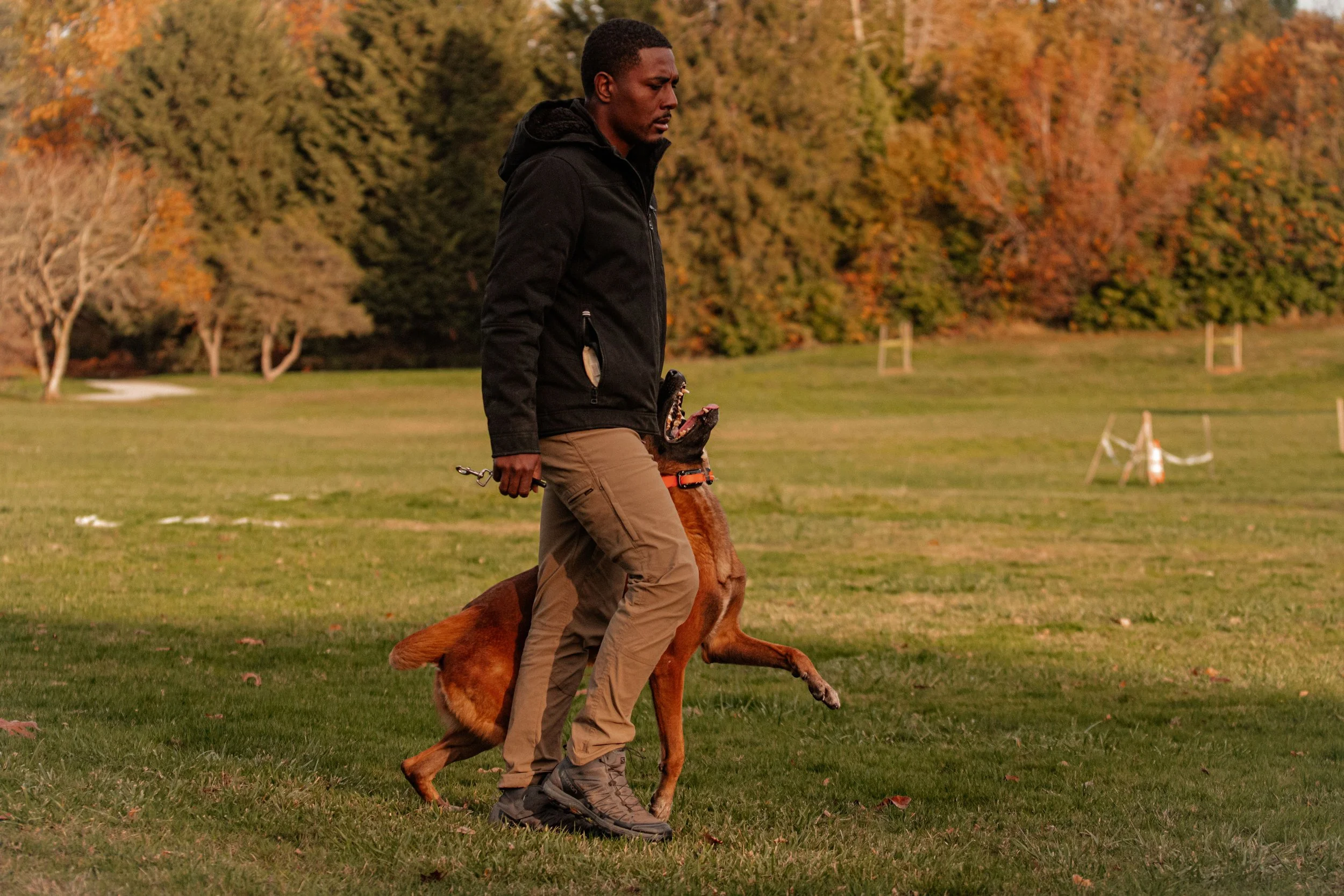
Clear communication is the foundation of great training—and it starts with your marker system. In this course, you’ll learn how to use classical conditioning to create a reliable language between you and your dog using reward and punishment markers. By marking the exact moment a behavior happens and communicating how & where the dog will be delivered, you can reinforce behaviors, reduce confusion, and increase motivation in your training sessions.
This course introduces the five primary types of reward markers (for food or toys indicating varying reward placements) and one non-emotional mistake/punishment marker. This course will allow you to build a solid training foundation based on trust, clarity, and consistency
Marker System
At the end of this course you will leave with a clear understanding of the marker system. Chris will demo with his dogs what the finished product looks like, teach you how to load each marker, and explain how to use them in your training. You will see multiple methods and examples of dogs to help you problem solve through whatever may come up with your dog at home. Through the process of teaching your dog markers you will develop a motivated and engaged training partner.
Effective training and strong partnerships all start with clear communication.
-
-
Intro to Course
One things for sure, Chris will entertain. Enjoy this course and the accompanying workbook. In each chapter Chris will demonstrate and explain the marker, then teach you how to loaded it with a new dog, then will offer some additional insight into how the marker can be used in sport and pet training.
One things for sure, Chris will entertain. Enjoy this course and the accompanying workbook. In each chapter Chris will demonstrate and explain the marker, then teach you how to loaded it with a new dog, then will offer some additional insight into how the marker can be used in sport and pet training.
-
What is a Marker?
Markers are your communication system. They allow you to capture behavior when training. This system incorporates a series of different markers with their corresponding rewards placements. Having multiple markers allows you to reinforce positions carefully when you’re battling anticipation mistakes and forces your dog to think and remain engaged in high states of arousal.
Markers are your communication system. They allow you to capture behavior when training. This system incorporates a series of different markers with their corresponding rewards placements. Having multiple markers allows you to reinforce positions carefully when you’re battling anticipation mistakes and forces your dog to think and remain engaged in high states of arousal.
-
-
-
'Yes' Demo Video with Player P
‘Yes’ is one of the most fundamental markers in your communication system. The way I use it represents a terminal marker meaning the dog can leave the position to come to you for the reward. Even under a simplified marker system this will always be the foundation!
‘Yes’ is one of the most fundamental markers in your communication system. The way I use it represents a terminal marker meaning the dog can leave the position to come to you for the reward. Even under a simplified marker system this will always be the foundation!
-
Loading 'Yes' with Xena
Watch me load the ‘yes’ marker with a dog who has never seen this before. Teaching this marker will also help with building engagement. Make sure the treat is tucked into your hand, they have access to it but you can control when it is ultimately released to them.
Watch me load the ‘yes’ marker with a dog who has never seen this before. Teaching this marker will also help with building engagement. Make sure the treat is tucked into your hand, they have access to it but you can control when it is ultimately released to them.
-
Here is another example loading ‘Yes’ with another puppy.
-
Using 'Yes' for Engagement with Vaquero
Here is an example of how you can use ‘Yes’ to build engagement in the environment. When you bring your dog new places you can show them through their own choices what behavior pays (engagement with me) vs. concern or nerve around the environment. This way you’re helping your dog acclimate to a new space while also reinforcing engagement.
Here is an example of how you can use ‘Yes’ to build engagement in the environment. When you bring your dog new places you can show them through their own choices what behavior pays (engagement with me) vs. concern or nerve around the environment. This way you’re helping your dog acclimate to a new space while also reinforcing engagement.
-
'Yes' Builds an Active Dog with Q
When this marker and type of training has been built up in your dog, you will have a dog who hops out the car and regardless of the environment is actively pushing you to work. This can be particularly important for sport dogs.
When this marker and type of training has been built up in your dog, you will have a dog who hops out the car and regardless of the environment is actively pushing you to work. This can be particularly important for sport dogs.
-
-
-
'Good' Marker Intro & Demo
The ‘Good’ marker is a duration marker where you pay them in place in the behavior. This marker allows you to build stability and keep the arousal state lower in training. When you teach positions (sit, down, stand) using your good marker helps teach those with an implied stay. Meaning sit means remain there until I release you.
The ‘Good’ marker is a duration marker where you pay them in place in the behavior. This marker allows you to build stability and keep the arousal state lower in training. When you teach positions (sit, down, stand) using your good marker helps teach those with an implied stay. Meaning sit means remain there until I release you.
-
Loading 'Good' with Xena
A special facet of loading the ‘good’ marker is to also teach them the difference between a closed and open hand lure. Open = permission to push into it. Closed = back off the the hand.
A special facet of loading the ‘good’ marker is to also teach them the difference between a closed and open hand lure. Open = permission to push into it. Closed = back off the the hand.
-
Loading 'Good' with Vaquero
For a dog that already has some basic obedience cues like a sit or down, you can use that to clarify the difference between ‘yes’ and ‘good.’ Here you’ll see 'good’ he remains and stays in place, versus ‘yes’ he can break off and come to me for the reward.
This video has a nice example of a conditioned ‘no’ marker where he recognizes off the no marker that a mistake was made and corrects himself. You can quickly turn ‘good’ into a variable reward rate where sometimes you pay sometimes you don’tFor a dog that already has some basic obedience cues like a sit or down, you can use that to clarify the difference between ‘yes’ and ‘good.’ Here you’ll see 'good’ he remains and stays in place, versus ‘yes’ he can break off and come to me for the reward.
This video has a nice example of a conditioned ‘no’ marker where he recognizes off the no marker that a mistake was made and corrects himself. You can quickly turn ‘good’ into a variable reward rate where sometimes you pay sometimes you don’t
-
-
-
'Get It' Marker Intro & Demo
‘Get It’ is your indirect reward marker. This reward marker is great for working impulse control, engaging their brain in training, and fixing position issues that can happen from your dogs anticipation mistakes.
‘Get It’ is your indirect reward marker. This reward marker is great for working impulse control, engaging their brain in training, and fixing position issues that can happen from your dogs anticipation mistakes.
-
Loading 'Get it' with Sniffers
Watch me load ‘get it’ with my puppy. Here you’ll see me problem solve a bit switching from food to toys. As you can see sometimes you have to get pretty silly or active to get the dog engaged with the toys. Its important once you start to commit to it!
Watch me load ‘get it’ with my puppy. Here you’ll see me problem solve a bit switching from food to toys. As you can see sometimes you have to get pretty silly or active to get the dog engaged with the toys. Its important once you start to commit to it!
-
Loading 'Get It' with Xena
Here instead of toys I’m using the food bowl to load the ‘Get it’ marker. Some dogs have higher food drive than toy drive so you can decide for your dog what makes the most sense to train with.
Here instead of toys I’m using the food bowl to load the ‘Get it’ marker. Some dogs have higher food drive than toy drive so you can decide for your dog what makes the most sense to train with.
-
-
-
'Go' for Recall
The ‘go’ marker I use mostly for recall drills, reseting a training set up, and just to throw in the mix in training when I do the marker discrimination game you’ll see later.
The ‘go’ marker I use mostly for recall drills, reseting a training set up, and just to throw in the mix in training when I do the marker discrimination game you’ll see later.
-
Loading 'Go' with Roscoe
This video show’s how I load ‘go’ while also drilling recall with a foster dog.
This video show’s how I load ‘go’ while also drilling recall with a foster dog.
-
'Go' Demo with Vaquero for Positions
‘Go’ can be really good for lower drive dogs because the chase will increase arousal. Sometimes if you need to bring a little more energy to the training releasing into ‘go’ can get you there. This dog nicely starts running before the cue but when they’re learning you can mark then toss.
‘Go’ can be really good for lower drive dogs because the chase will increase arousal. Sometimes if you need to bring a little more energy to the training releasing into ‘go’ can get you there. This dog nicely starts running before the cue but when they’re learning you can mark then toss.
-
Using 'Go' in Play to Build Clarity
Here is how I use ‘go’ in place to practice the dog listening while in a higher state of drive. For really possessive dogs too it can get them more comfortable releasing toys as they start to understand that can mean another toy is available.
Here is how I use ‘go’ in place to practice the dog listening while in a higher state of drive. For really possessive dogs too it can get them more comfortable releasing toys as they start to understand that can mean another toy is available.
-
-
-
'Switch' Explanation
The ‘switch’ marker is when your dog releases the toy they have in their hand to bite another toy that I present. This can be really helpful with recall drills, or to speed up an exercise in sports such as a dumbbell retrieve. This can also be a way to teach a dog to out with minimal conflict.
The ‘switch’ marker is when your dog releases the toy they have in their hand to bite another toy that I present. This can be really helpful with recall drills, or to speed up an exercise in sports such as a dumbbell retrieve. This can also be a way to teach a dog to out with minimal conflict.
-
'Switch' Demo w/ Player P
Here’s a demonstration with my dog Player P. Key here for the using discernment in drive is that just because the second toy gets presented doesn’t mean he can come off the tug he has to bite - its important the dog is waiting for your verbal marker.
Here’s a demonstration with my dog Player P. Key here for the using discernment in drive is that just because the second toy gets presented doesn’t mean he can come off the tug he has to bite - its important the dog is waiting for your verbal marker.
-
Teaching 'Switch' to Sniffers
Watch me teach ‘switch’ for the first time with the puppy. You have to make the toy they have become boring and entice them to switch by playing with the new one.
Watch me teach ‘switch’ for the first time with the puppy. You have to make the toy they have become boring and entice them to switch by playing with the new one.
-
Using Food for 'Switch' w/ Sniffers
For a dog that’s less toy motivated here is how you can use food to teach a switch game. This also reinforces the open/closed hand luring you saw during the good marker section.
For a dog that’s less toy motivated here is how you can use food to teach a switch game. This also reinforces the open/closed hand luring you saw during the good marker section.
-
Problem Solving 'Switch' w/ a Possessive Dog
This lesson is a good example of what you might encounter working a more possessive dog when teaching ‘switch.’
This lesson is a good example of what you might encounter working a more possessive dog when teaching ‘switch.’
-
-
-
'No' Marker & Introducing Corrections
In the most basic communication system the ‘no’ conditioned punisher marker is incredibly important. Unlike reward markers you have to ‘load’ this through daily life and real training scenarios. Thresholds with the lease or using the crate door are great options. You can see how fairly pressure is applied here. Once the marker has been appropriately paired the dog will understand the cue and sometimes it does not need to be followed by any type of correction.
In the most basic communication system the ‘no’ conditioned punisher marker is incredibly important. Unlike reward markers you have to ‘load’ this through daily life and real training scenarios. Thresholds with the lease or using the crate door are great options. You can see how fairly pressure is applied here. Once the marker has been appropriately paired the dog will understand the cue and sometimes it does not need to be followed by any type of correction.
-
-
-
Marker Discrimination Game & Reward Placement in Obedience
This is an example of how I use all the markers together to play with my dog. This is both exercise and mental stimulation. Often time its a way we warm up before training as well. For sport dogs this type of clarity in drive is incredibly appropriate. For pet dogs practicing control and engagement in higher states of arousal helps for your daily life situations where they might struggle around triggers or overstimulating environments.
This is an example of how I use all the markers together to play with my dog. This is both exercise and mental stimulation. Often time its a way we warm up before training as well. For sport dogs this type of clarity in drive is incredibly appropriate. For pet dogs practicing control and engagement in higher states of arousal helps for your daily life situations where they might struggle around triggers or overstimulating environments.
-
Using Markers for Engagement in New Environment/Before Training
Here’s an extra clip on how the markers get used for engagement before a workshop session. This could be how you start your sports dog at workshops or on new fields. This could be when you go on errands what you do before entering the coffee shop with your pet dog. It’s a way to connect & communicate.
Here’s an extra clip on how the markers get used for engagement before a workshop session. This could be how you start your sports dog at workshops or on new fields. This could be when you go on errands what you do before entering the coffee shop with your pet dog. It’s a way to connect & communicate.
-
-